Language
English English Russian
Position :
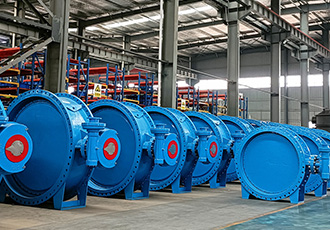
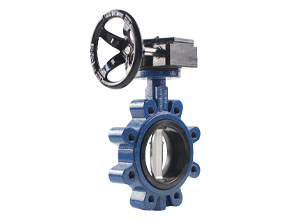
Ductile Iron Double Eccentric Butterfly Valve

Ductile Iron Double Eccentric Butterfly Valve

Size Range: DN100-DN3000
Pressure: PN10/16
Body Materials: Ductile Iron/WCB
Disc Materials: QT450-10
Stem Materials: 2Cr13
Connection: Flange
INTRODUCTION
DATA
Related
INQUIRY
INTRODUCTION
Double eccentric butterfly valve is mainly used for drainage of water plants, power plants, steel smelting, chemical industry, water source engineering, environmental facility construction, etc., especially suitable for water pipelines, as regulating and intercepting equipment. Compared with the centerline butterfly valve, the double eccentric butterfly valve is more resistant to high pressure, has a longer life and good stability. Compared with other valves, the larger the caliber, the lighter the material, and the lower the cost.
The structural feature of the double eccentric butterfly valve is that the shaft center of the valve stem deviates from the center of the butterfly plate and the center of the body. The double eccentric effect enables the butterfly plate to be released from the valve seat immediately after the valve is opened, which greatly eliminates unnecessary excessive extrusion and scratching of the butterfly plate and the valve seat, reduces the opening resistance, reduces wear and improves The life of the valve seat is improved. The scraping is greatly reduced, and at the same time, the double eccentric butterfly valve can also use a metal seat, which improves the application of the butterfly valve in the high temperature field.

Features
Applicable medium:Water, gas, oil, etc
Suitable temperature:0℃~80℃
Application field:Water treatment, municipal construction, drainage, power plants, etc.

Product advantages
1.The body material is QT450 or WCB, and the chemical composition and mechanical properties meet the requirements of national standards. Material reports can be provided.
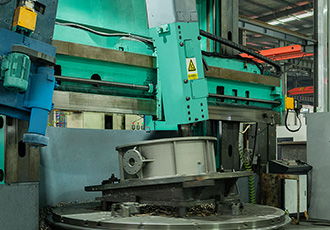
2.The valve body and inner parts are processed by CNC precision machine with high precision.
3.Adopt body sealing structure, which is different from the conventional plate sealing structure in the market, and can realize two-way sealing.
4.There are rubber soft seals and stainless steel hard seals available. The valve plate and other parts can also be selected according to the working conditions.
5.The valve seat is welded with stainless steel, which is more wear-resistant and has a longer service life.
6.The valve shaft is supported by self-lubricating sleeve bearings, which can reduce the friction produced during valve shaft transmission and reduce torque.
7.The world-famous brand Aksu epoxy resin spraying is used, and the spraying thickness is 250um.
8.Each valve must be tested in accordance with national standards when leaving the factory, and unqualified products will never
DATA
Executive standard:
Name Design and manufacture Face to face Length End  Flange Pressure Test 
Reference Standard GB/T 12238 GB/T 12221 GB/T 17241.6 GB/T 13927

Material of Main Parts:
Name 5-Body 7-Disc 6-Stem 10-Disc Sealing 11-Body Sealing
Material QT450-10 QT450-10 2Cr13 NBR 304

Dimensions:
Size   PN10 PN16
DN NPT L D2 n-d D2 n-d
100 4" 127 180 8-φ19 180 8-φ19
125 5" 140 210 8-φ19 210 8-φ19
150 6'' 140 240 8-φ22 240 8-φ22
200 8'' 152 295 8-φ22 295 12-φ22
250 10'' 165 350 12-φ22 355 12-φ28
300 12'' 178 400 12-φ22 410 12-φ28
350 14'' 190 460 16-φ22 470 16-φ28
400 16'' 216 515 16-φ28 525 16-φ31
450 18'' 222 565 20-φ28 585 20-φ31
500 20'' 229 620 20-φ28 650 20-φ24
600 24'' 267 725 20-φ31 770 20-φ37
700 28'' 292 840 24-φ31 840 24-φ37
800 32'' 318 950 24-φ34 950 24-φ40
900 36'' 330 1050 28-φ34 1050 28-φ40
1000 40'' 410 1160 28-φ37 1170 28-φ43
1200 48'' 470 1380 32-φ40 1390 32-φ49
1400 56'' 530 1590 36-φ43 1590 36-φ49
1600 64'' 600 1820 40-φ49 1820 40-φ56
1800 72'' 670 2020 44-φ49 2020 44-φ56
2000 80'' 760 2230 48-φ49 2230 48-φ62
2200 88'' 800 /
2400 96'' 850
2600 104'' 900
2800 112'' 950
3000 120'' 1000


FAQ
Q: Are you a genuine manufacturer or a trading company? Can we inspect the goods at our factory?
A: Yuming Valve Group was established in 1972, with an 82,000㎡ production base, 500+ employees, and its own water treatment butterfly valve production workshop, completing the entire process from casting to finished product in-house. We support third-party inspection and customer on-site inspection, and can provide 3.1 material certificates, PMI spectral analysis, and FAT factory testing documentation. We support online factory visits, and welcome on-site inspections; we can provide factory videos and pictures.

Q: How can I confirm that your products are suitable for my project?
A: Please provide the following information, and the Yuming technical team will provide selection recommendations within 24 hours: media type (clean water/sewage/seawater/circulating water, whether it contains particles or oil), diameter and pressure (DN/PN or Class), temperature range, application (isolation/regulation/dual use), drive method, installation location, project standard requirements, certification requirements, target quantity, and delivery date.

Q: What is the delivery time? How long can expedited delivery take?
A: Standard specifications DN50-DN600: Regular delivery 1-2 weeks, expedited 1 week (stock confirmation required). Larger diameter DN700-DN1200: Regular delivery 1-3 weeks, expedited 4-5 weeks. Non-standard customization: 8-10 weeks, expedited 6-7 weeks. Advance ordering is recommended for project procurement.

Q: Can non-standard diameters or special coatings be customized? What is the minimum order quantity?
A: Yuming Water Treatment Butterfly Valve Workshop supports full-dimensional customization. Diameters can be customized up to DN2000 (project evaluation required), pressure up to PN40, sealing options include PTFE/metal hard seal, butterfly plate options include CF8/CF8M/duplex steel, and drive methods include electric/pneumatic/hydraulic (ISO 5211 interface). Standard specifications require a minimum order of 1 unit; non-standard customization depends on specific circumstances, and bulk project pricing is negotiable.

Q: What are some common butterfly valve malfunctions? How to quickly troubleshoot them?
A: Incomplete closure/internal leakage—most likely due to the butterfly plate not closing fully, foreign objects on the sealing surface, or worn sealing rings. Correct the limit switch → clean the sealing surface → replace the sealing rings. Leakage at the valve stem—loose packing gland or aged packing. Tighten the gland evenly or replace the packing. Jamming during opening and closing—mud buildup in the valve cavity, insufficient oil on the valve stem, or misalignment of the flange. Clean the valve cavity → add grease → straighten the pipeline. Abnormal noise/water hammer during operation—opening and closing speed is too fast. Slow down the actuator speed. Do not force the actuator when jamming occurs; manually test the valve stem first to confirm the cause.

Q: What is the expected service life of a butterfly valve? When do the sealing rings need to be replaced?
A: The expected service life of a soft-seal double eccentric butterfly valve under water treatment conditions is 20-30 years. The sealing ring replacement cycle depends on the operating conditions: 8-10 years for municipal water supply isolation valves, 5-7 years for sewage treatment pipelines, and 3-5 years for pump outlets with frequent opening and closing. Key to extending lifespan: Perform a full open/close operation at least once every 6 months to prevent cold flow adhesion of the sealing ring and valve stem jamming; regularly check for leaks in the valve stem packing; install a pre-filter in wastewater applications to reduce particulate matter erosion.

Q: What is the difference between a double eccentric butterfly valve and a centerline butterfly valve? Which should be chosen for a water treatment project?
A: In a double eccentric butterfly valve, the valve stem axis is offset from both the center of the butterfly plate and the center line of the sealing surface. During opening and closing, the butterfly plate only contacts the valve seat in the last 10°, with the remaining stroke completely separated. This reduces friction by more than 80%, reduces operating torque by 30-35%, and the valve seat life is 2-3 times that of a centerline butterfly valve. Double eccentric valves are chosen for pump outlet isolation in water treatment plants, aeration pipelines in wastewater treatment, and frequent opening and closing conditions; centerline butterfly valves are sufficient for ordinary low-pressure water supply and drainage and budget-sensitive applications.

Q: What is the difference between flanged and wafer-type double eccentric butterfly valves? Which should be chosen for a water treatment project?
A: Flanged valves have flanges on both sides, directly bolted to the pipe flanges, offering high connection strength and allowing for single-sided disassembly and maintenance. They are suitable for large diameters (DN400 and above) and high-pressure applications. Wafer-type valves lack flanges and are fixed by flanges on both sides of the pipe. While compact, they cannot be inspected from one side, and uneven flanges can easily lead to leaks. Flanged valves are recommended for main water treatment pipelines, pump outlets, and applications requiring single-sided maintenance; wafer-type valves are suitable for diameters below DN400, space constraints, and budget-sensitive applications.

Q: Should I choose EPDM or NBR for the sealing ring of a water treatment butterfly valve?
A: EPDM is the preferred choice for water treatment applications. EPDM is wear-resistant, aging-resistant, and steam-resistant, with an applicable temperature range of -40°C to 150°C, making it the best choice for clean water, wastewater, and steam media. NBR has good oil resistance but poor aging resistance, and is only suitable for oily media applications.

Q: How should I choose the butterfly plate material? Which is better, nickel-plated ductile iron or stainless steel?
A: It depends on the corrosiveness of the water. For general clean water and wastewater, ductile iron with nickel plating (DI+Ni) offers the best cost-performance ratio, with a nickel plating layer ≥20μm and passing a 1000-hour salt spray test. For slightly corrosive industrial circulating water, CF8 (SS304) is selected. For seawater desalination and high-chloride water, CF8M (SS316) is chosen. For extreme corrosive conditions, duplex stainless steel is an option. Yuming water treatment butterfly valves come standard with ductile iron nickel-plated butterfly plates, with optional upgrades to CF8/CF8M/duplex steel.

Q: How to choose between ductile iron and carbon steel for the valve body?
A: For water treatment applications, ductile iron is the preferred choice, with a tensile strength ≥400MPa and an FBE epoxy powder coating (250-300μm), offering corrosion resistance for 20-30 years and a significantly better cost-performance ratio than carbon steel. Carbon steel has higher strength but requires additional coating protection and is more expensive, mainly used in high-pressure (>PN25) or high-temperature conditions. Stainless steel valve bodies are suitable for corrosive media, but are more expensive.
 
Inquiry
If you would like to contact us for more information about our products ,please fill out the form below,thank you.
*Name
*E-mail
Phone
Country
Type
Size
Materials
Pressure
Medium
Temper
*Message
Quick consultation
Name:
Email:
Phone:
Type:
Size:
Message:
Copyright: 1972-2020 Yuming Valve Group Co,Ltd. All rights reserved.