Language
English English Russian
Position :
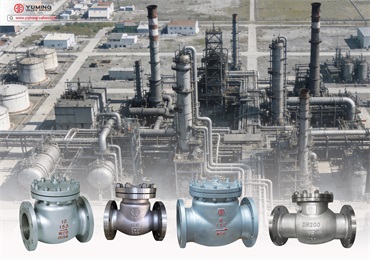
【Valve Knowledge】Classification of Check Valves
2025-10-24
1. Classification by Structural Form 2. Classification by function and application scenario 3. Classification by material 4. Classification by connection method 5. Classification by special working conditions.
Vide More
【Valve Knowledge】Main Functions of Pressure Reducing Valves
2025-10-15
1. Pressure Regulation and Stabilization.2. Protecting Equipment and System Safety.3. Energy Saving and Optimized Operation.4. Adapt to Different Operating Conditions.5. Flow Control Assistance.
Vide More
【Valve Knowledge】Common Materials for Valve Bodies
2025-10-09
Metal materials are the core choice for valve bodies due to their high strength and good pressure resistance. According to the material properties, they can be divided into cast iron, cast steel, stainless steel, non-ferrous metals and corrosion-resistant alloys.
Vide More
Why might a valve fail to open after being closed for an extended period?
2025-09-22
The key reason a valve fails to open after being closed for an extended period is that, due to the media and environmental influences, the valve's internal components undergo physical or chemical changes during prolonged static operation. This can cause moving parts (such as the valve stem, gate, and ball) to become stuck or locked, preventing them from operating normally.
Vide More
Selecting Valves for Corrosive Media Like Strong Acids and Alkalis
2025-09-17
Selecting valves for corrosive media like strong acids and alkalis is a critical and highly specialized issue. Improper selection can lead to rapid valve failure and media leakage, resulting in safety incidents, environmental pollution, and production interruptions.
Vide More
Pneumatic valves move slowly. What might be the cause?
2025-09-07
The core reason for the slow movement of pneumatic valves is "insufficient power (compressed air)" or "excessive resistance" to drive the valve movement, which causes the actuator to push the valve core/disc and other components to move at a lower speed.
Vide More
 1 2 3 4 5 6 7 8 9 10 
Quick consultation
Name:
Email:
Phone:
Type:
Size:
Message:
Copyright: 1972-2020 Yuming Valve Group Co,Ltd. All rights reserved.